Our ethos
The rebirth of fiction
2026 was a year of rebirth for fiction. Where some saw a civilization collapsing about them, we saw a rising from the ashes — a return to story for what it was built for: not simply to entertain, but to help us evolve, from within.
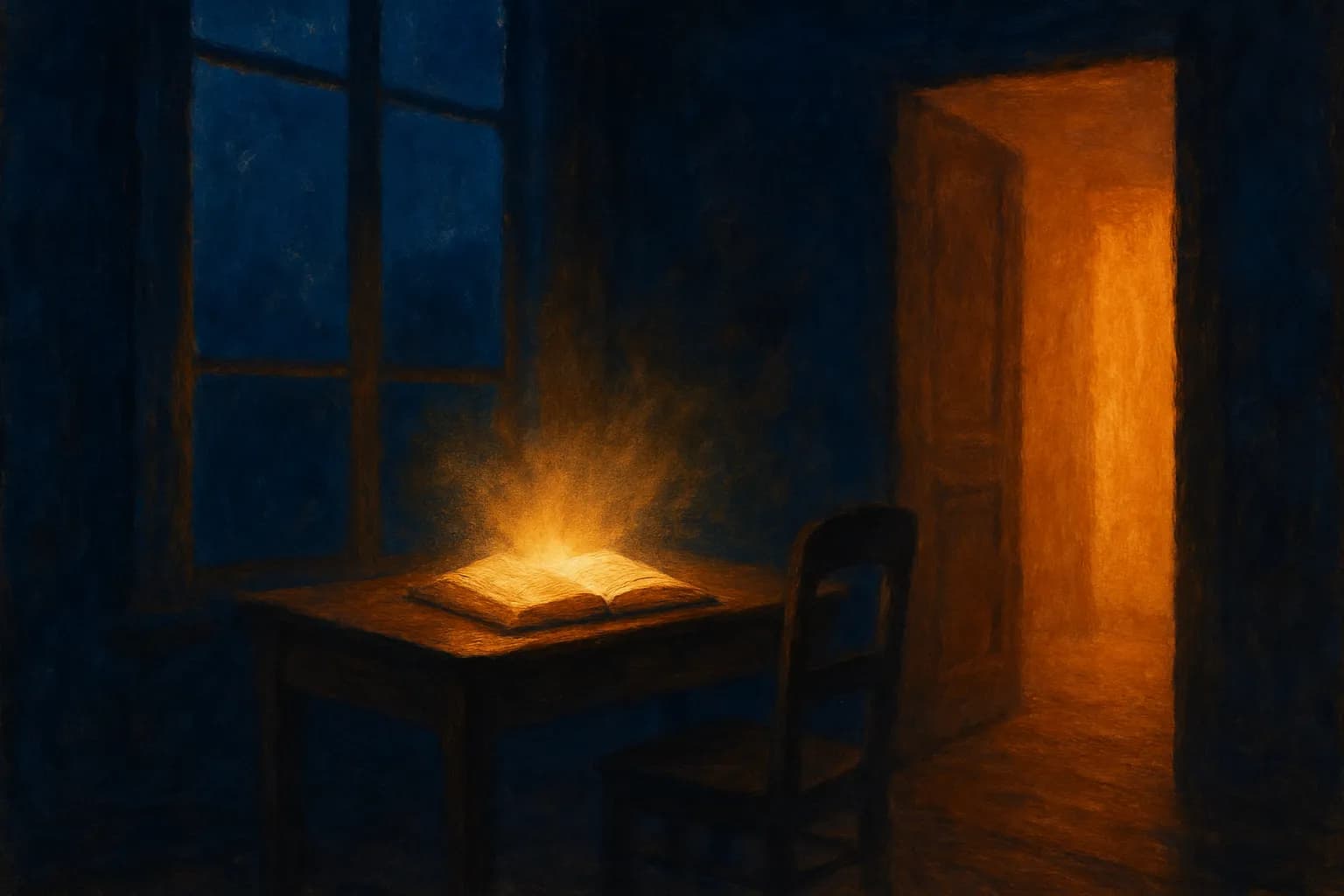
A story is a threshold, not a mirror.
The oldest stories weren’t amusements — they were instruments. A myth was a piece of technology for becoming someone new. That’s the thing we think 2026 is rediscovering.
The oldest stories carried a person across a threshold instead of around it — a door, not a decoration.
The feed era flattened story into something to pass the time. We build for the opposite: a story that returns you changed.
Fiction meant to help us grow from the inside — the reason it was built, remembered and made new.
For most of a century we asked stories to distract us — to fill the commute, the waiting room, the long dark — and we forgot they were ever load-bearing. The oldest stories were not amusements. They were instruments. They carried a person across a threshold instead of around it. A myth was a piece of technology for becoming someone new.
Then the feeds came, and story flattened into content: infinite, frictionless, forgettable. Built to be consumed, not to change the one consuming. Tuned to hold attention, never to return it transformed.
That era is ending — not in collapse, but in remembering.
What we believe
A story is a mirror you can survive looking into.
Your own life, told straight, is too close to see. Told slant — different names, a world of its own — it becomes legible. Distance is the gift fiction was always offering.
Fiction is evolutionary, not decorative.
The point is not the hour spent inside it but the person who walks out. A story that leaves you unchanged didn’t do its job.
The raw material is your real life.
Not a prompt, not a trope — the actual friction, the actual people, the unresolved days. We turn what you’ve already lived into something you can finally look at.
Your truth, never your data.
The life is the inspiration; the fiction is what you share. No real names leave the room.
Resonance over reach.
Friction steals energy; resonance multiplies it. We build for the second kind of story — the one that gives energy back.
The belief, made operable
How it shows up.
You write the raw days.
The journal.
Odessa gives them a world.
The pattern beneath, told as fiction — the human field beneath the signal.
Graphene gives it a voice.
So you can hear your own life told slant.
The Hum keeps the loop honest.
Real change in a life becomes real change in the story.
We are not in the entertainment business.
We are in the becoming business.
Story is just the oldest tool we have for it — and the most human.